 Sokira
The "ADHD Advantage" Story, Told Honestly
ADHD as a secret superpower makes a great headline. New long-term research tells a more honest story, and it is about scaffolding, not capability.

I have started companies, and the ADHD-entrepreneur superpower story has always made me uneasy. Not because the traits are imaginary. I have used them. Because I watched what the same traits cost at my own kitchen table, in the same house, in someone who was not being handed what I was handed.
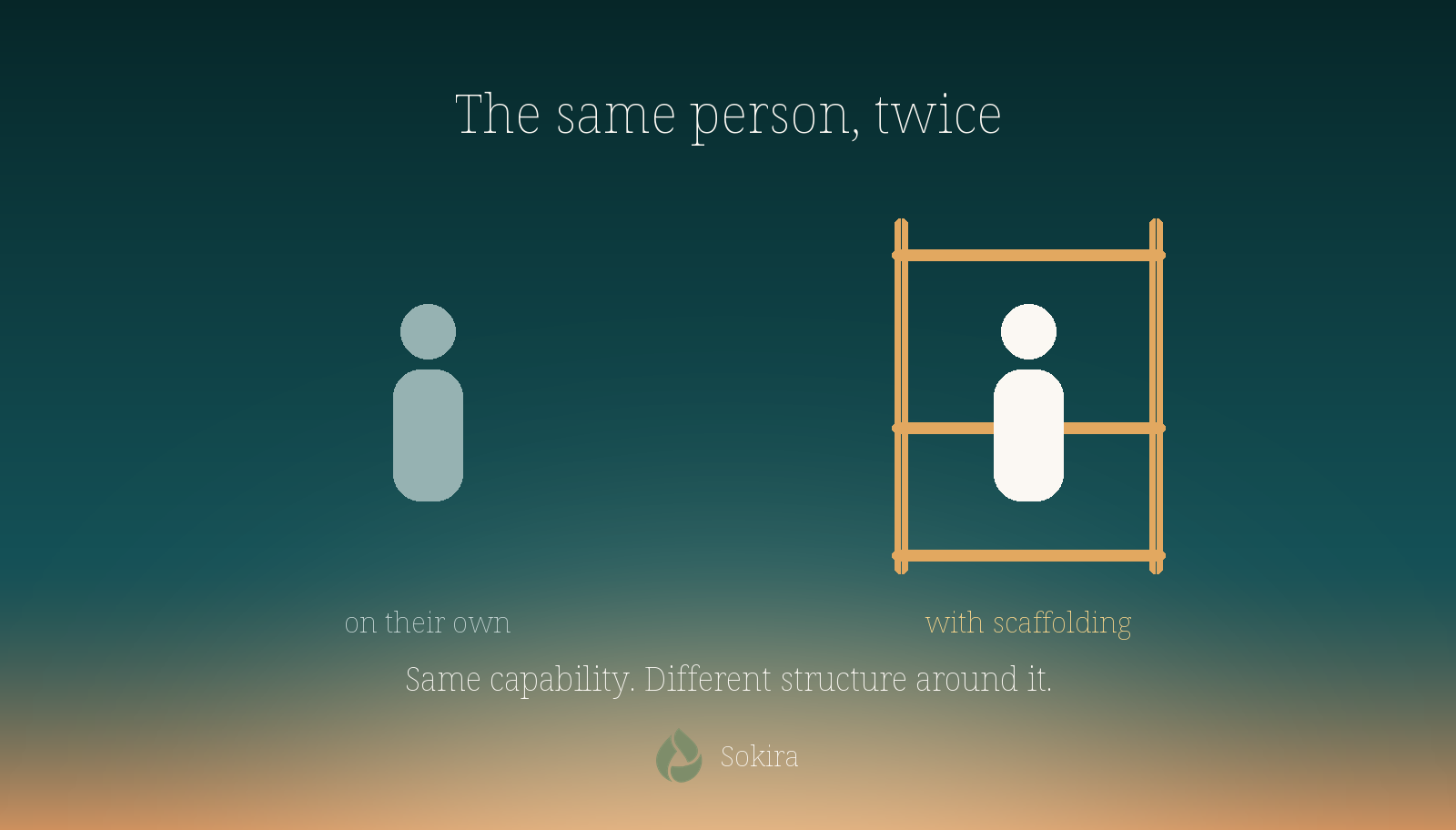
The truth I believe after this year’s research is that the traits were never the whole story. The scaffolding around a person decides who gets to use them. Some people are handed scaffolding. Most people, and especially most women, are handed a lecture about potential.
Jack, Sokira’s founder
The pitch everyone has heard
You know the version. ADHD is not a disorder, it is an entrepreneurial engine. Impulsivity becomes decisiveness. Distractibility becomes pattern spotting. Restlessness becomes drive. Hyperfocus becomes the all-night build that founds the company. Somebody famous is offered as proof, and the moral is that you were never broken, you were simply built for a different game.
It is worth saying fairly: this story was made with good intentions, and it landed on people who had spent years being told the opposite. After a childhood of report cards about wasted potential, being told your wiring is an asset is a genuine relief.
The trouble is what it does on the days it is not true for you. If ADHD is a superpower and your Tuesday still ended with nothing started, the story quietly hands you a second failure. Not only did you not do the thing, you failed to cash in the advantage everyone says you were given.
What a long-term study actually found
Researchers recently followed a large group of Americans from childhood into working life, across nearly three decades, and looked at who went on to start businesses. On average, they did not find an entrepreneurial advantage for people with ADHD. The superpower, taken as a general claim about a population, did not show up.
What is more interesting is what sat underneath the average. Men with strong resources around them did start businesses at high rates. Women with ADHD started them at the lowest rates in the study. And the part that should end the debate about capability: extra ability did not close that gap for the women. Being more capable did not buy the same outcome.
“The pattern points to social and structural barriers rather than any difference in capability.”
Read that slowly if you have spent years assuming the problem was you. The gap the researchers found is not a gap in what people can do. It is a gap in what was built around them while they were doing it.
Why this is good news
It does not sound like good news at first. It sounds like the consolation prize was just taken away. But look at what the two competing stories ask of you.
The deficit story says the problem is inside you and you should work on yourself. The superpower story says the solution is inside you and you should unlock yourself. Both put the whole weight on the person, and both leave you alone with it at eight in the morning with the thing you cannot start.
If the gap is structural, then the fix is structural too. Scaffolding can be added. It can be added this week, in small amounts, by ordinary means. Nobody has to become a different person first, which is fortunate, because becoming a different person is the one plan that has never worked for anybody.
What scaffolding means at the personal scale
Structural sounds like policy, and some of it is. But the version you can reach today is smaller and more physical than that.
- Presence at the starting line. Another person in the room, or a voice in your ear, at the exact moment a task has to begin. This is what body doubling for ADHD is, and it is scaffolding in its plainest form: support supplied from outside rather than summoned from inside.
- Steps sized to start. Not a plan for the project. One move small enough that beginning it is not a decision. Said out loud, so it exists somewhere other than your head.
- Help at the point of performance. Not the night before, not in a planning session on Sunday, but at the moment of doing. Support that arrives early and leaves before the hard part is support that was never there.
None of that is self-improvement. It is furniture. You would not congratulate someone for using a ramp, and you should not charge yourself admission for using presence.
The thread about women
The gap in that research did not appear at the moment somebody decided whether to start a business. It was built over decades, and much of it was built out of not being seen. Why so much ADHD in women goes unseen is a long story of effort that looks like nothing from the outside, and what a late diagnosis actually feels like is the other half of it, arriving after the years when scaffolding would have counted most.
A woman who was never identified was not offered accommodations, coaching, or the assumption that her difficulty was structural. She was offered a theory about her character. Then, later, she was offered a superpower narrative asking her to be grateful for the same traits nobody supported her through.
So here is the honest version. The superpower story and the deficit story are both stories about the person. The research points somewhere else. What differs is the support, and support is the one part of this that can be changed on purpose, starting with the next thing you have to begin.
Sokira is one small piece of scaffolding: a voice you can say the task to, that helps cut it to a first move and stays with you while you start. Four calm voices, no scores, no streaks. First week free.

A calm voice that helps you start. Free for the first week.